


How to Store Clothes Safely at Locked Self Storage Alloa
March 9, 2026
Why Businesses Use Locked Self Storage for Business Storage in Alloa
May 15, 2026Decluttering Tips: How to Create More Space at Home
Overview
Decluttering your home can create more space and make everyday belongings easier to organise, but knowing where to start can often be the hardest part.
These practical decluttering tips will help you work through your home gradually, decide what to keep, organise what remains and create a more functional living space without trying to tackle everything at once.
Start Small and Build Momentum
One of the most useful decluttering tips is to avoid trying to tackle your entire home at once.
Instead, choose one small, manageable area such as:
- A single drawer
- One cupboard
- A bookshelf
- A kitchen cabinet
- Your bedside table
- One category of clothing
Finish that area before moving onto the next.
Working in smaller sections gives you a clear sense of progress and makes a larger decluttering project feel much more manageable.
Be Honest About What You Actually Use
One of the most effective decluttering tips is to be honest about whether your belongings still deserve the space they occupy.
As you work through each area, ask yourself:
- Do I actually use this?
- When did I last use it?
- Would I buy it again today?
- Do I have another item that serves the same purpose?
- Am I keeping it because I need it or because I feel guilty getting rid of it?
- Is it worth the space it takes up?
Broken items that have been sitting untouched are unlikely to suddenly become useful, while duplicates and “just in case” belongings can gradually take up a surprising amount of space.
You don’t need to get rid of everything. The aim is simply to make more deliberate decisions about what stays in your home.
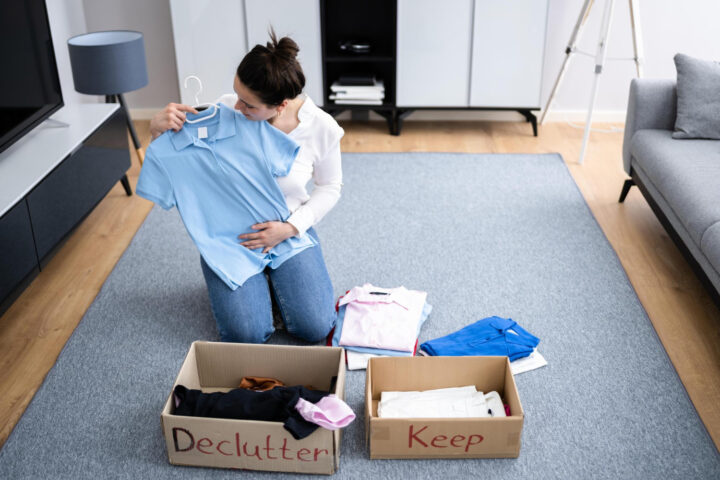
Use a Simple Decluttering System
Avoid creating dozens of categories while sorting. A simple system makes it easier to make decisions and keep moving.
Separate belongings into:
- Keep – items you regularly use or genuinely value
- Donate – usable belongings that could benefit someone else
- Sell – items worth the time and effort of selling
- Recycle – belongings that can no longer be used but can be recycled
- Store – belongings you want to keep but don’t currently need to have easily accessible
Try to deal with each category once you’ve finished an area rather than leaving bags and boxes around your home indefinitely.
Declutter One Room at a Time
Once you’ve dealt with a few smaller areas, start working through your home systematically.
Decluttering the Bedroom
Start with clothes, bedside tables, wardrobes and under-bed storage.
Consider removing:
- Clothes that no longer fit
- Items you haven’t worn for a long time
- Damaged clothing you aren’t going to repair
- Duplicate accessories
- Unwanted shoes
- Empty packaging and unused products
Seasonal clothing can be organised separately so everyday items are easier to access.
Decluttering the Kitchen
Kitchen cupboards can easily become filled with duplicate utensils, expired food and appliances that are rarely used.
Work through one cupboard at a time and check:
- Food expiry dates
- Duplicate utensils
- Unused appliances
- Chipped or damaged crockery
- Excess containers and lids
- Items pushed to the back of cupboards
Keep the things you use most frequently in the easiest-to-reach locations.
Decluttering the Living Room
Focus on surfaces, shelves, drawers and furniture that has gradually become a place to leave things.
Books, magazines, cables, electronics, decorations and children’s toys are useful categories to review.
Once you’ve decided what stays, give frequently used belongings a permanent place so they’re easier to put away.
Decluttering the Bathroom
Check toiletries, cosmetics, towels, cleaning products and medicines.
Dispose of products that are empty, no longer used or no longer suitable to keep, following any appropriate disposal instructions.
Group similar products together so you can easily see what you already have before buying more.
Decluttering the Garage, Loft or Shed
These areas often contain belongings that have been moved out of the main house without a longer-term decision being made about them.
Work through them in sections rather than emptying everything at once.
Separate items you still use from things that have simply remained there because there was somewhere to put them.
Avoid the ‘Maybe’ Pile
A large “maybe” pile can quickly slow down your progress.
If you’re genuinely unsure about something, create a small decision box and set yourself a date to review it.
If you haven’t needed or thought about those belongings by the time you review the box, it may be easier to decide whether they are worth keeping.
This prevents indecision from stopping the entire decluttering process.
Give Everything You Keep a Home
Decluttering isn’t finished when you’ve decided what to remove.
The belongings you keep should have somewhere logical to live.
Keep similar items together and place frequently used belongings somewhere convenient. Less frequently used items can go in higher cupboards, spare-room storage or other less accessible areas.
Containers, drawer dividers, baskets and labels can help, but avoid buying lots of organisers before decluttering. Otherwise, you may simply end up organising belongings you don’t actually need.
Deal With Decluttered Items Promptly
Once you’ve decided something is leaving your home, try to deal with it as soon as possible.
Take donations to your chosen charity, list worthwhile items for sale and recycle appropriate materials.
If you decide to sell something, consider setting yourself a deadline. If it hasn’t sold by then, decide whether reducing the price or donating it would be more worthwhile.
This prevents your decluttering piles from becoming a new form of clutter.
Think Seasonally
Some of the most practical decluttering tips involve thinking seasonally, particularly for belongings you only use at certain times of year.
These might include:
- Christmas decorations
- Garden equipment
- Winter or summer clothing
- Holiday equipment
- Seasonal sports equipment
Rotating seasonal belongings can free up accessible storage space for the things you’re currently using.
If you have belongings you genuinely want to keep but don’t have enough room for at home, temporary self storage can also be an option. If you’re unsure how much space your belongings would require, our Storage Calculator can help you estimate a suitable unit size.
Build Habits That Prevent Clutter Returning
The best decluttering tips aren’t just about clearing your home once; they’re about building habits that prevent clutter from returning.
Simple habits can include:
- Putting things away after using them
- Reviewing a drawer or cupboard periodically
- Avoiding unnecessary duplicate purchases
- Donating unwanted clothes regularly
- Reviewing belongings when seasons change
- Dealing with unwanted items rather than moving them elsewhere
You could also adopt a simple “one in, one out” approach for categories that tend to accumulate, such as clothing or children’s toys.
Small, regular decisions can prevent clutter from gradually building up again.
Decluttering Tips FAQs
Where should I start when decluttering my home?
Start with a small area where decisions are relatively easy, such as a drawer, shelf or cupboard. Completing one manageable area can help build momentum before you move onto larger rooms.
What is the easiest way to declutter?
Work through one small area at a time and separate belongings into clear categories such as keep, donate, sell, recycle and store. Avoid trying to declutter your entire home in one day.
What should I declutter first?
Start with items that have little emotional attachment and are easy to make decisions about. Everyday drawers, bathroom products, expired food and duplicate kitchen items can be easier starting points than sentimental belongings.
How do I decide what to get rid of?
Consider when you last used the item, whether you would buy it again today, whether you own something else that performs the same function and whether keeping it is worth the space it occupies.
How often should I declutter?
There is no fixed schedule. Small, regular decluttering sessions can prevent belongings from accumulating, while seasonal changes, moving home or reorganising a room are also useful opportunities to review what you own.
How can I stop clutter building up again?
Give the belongings you keep a permanent place, avoid unnecessary duplicate purchases and deal with unwanted items promptly. Regularly reviewing smaller areas can also prevent clutter from becoming a larger problem.
Put These Decluttering Tips Into Practice
We hope these decluttering tips have given you a practical starting point for creating a more organised and manageable home.
Remember, you don’t need to declutter everything at once. Start with one small area, make decisions at your own pace and build habits that make it easier to keep clutter under control over time.
Even small changes can make a noticeable difference to how your home looks, feels and functions.
Need More Space After Decluttering?
Sometimes decluttering reveals belongings you genuinely want to keep but don’t need at home every day.
For seasonal belongings, spare furniture, keepsakes or hobby equipment, Locked offers flexible self storage in Alloa when you need additional space outside your home.
Summary
The most effective decluttering tips are to start small, work through one area at a time and make deliberate decisions about what to keep, donate, sell, recycle or store.
Decluttering room by room, organising the belongings you keep and dealing with unwanted items promptly can help create more usable space at home. Regular reviews and simple habits can then help prevent clutter from gradually building up again.
For belongings you want to keep but don’t need at home every day, seasonal organisation or additional storage can help keep everyday living spaces more manageable.